
Engineered hardware, not a commodity box
A PowerNetPro system is designed from the cell up. Here's exactly how it goes together — in plain language, with the technical detail right alongside for anyone who wants it.
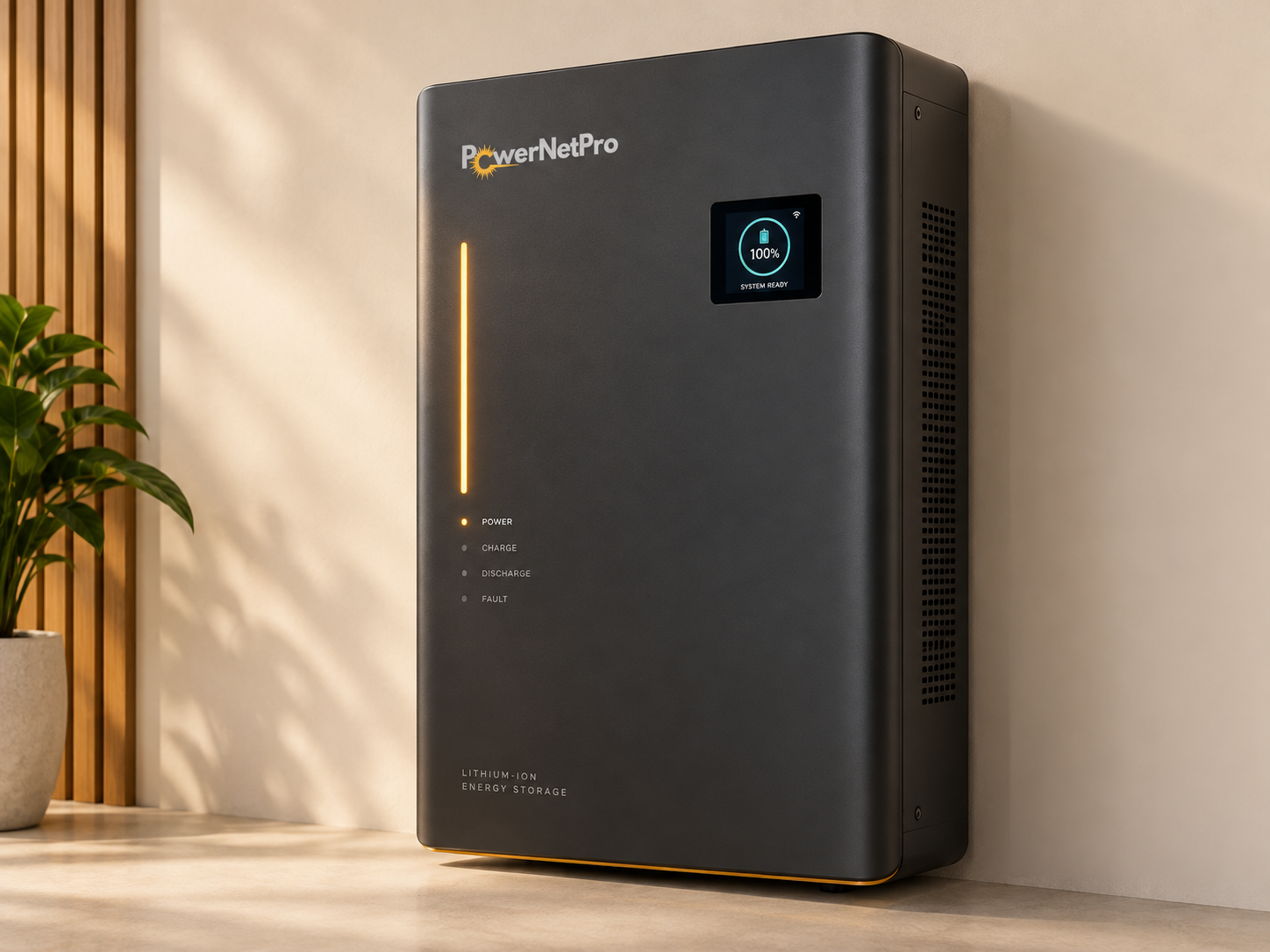
From a single cell to a finished pack
Three stages take raw chemistry to a sealed, protected product. Nothing is left as a loose assembly of parts.
- 1
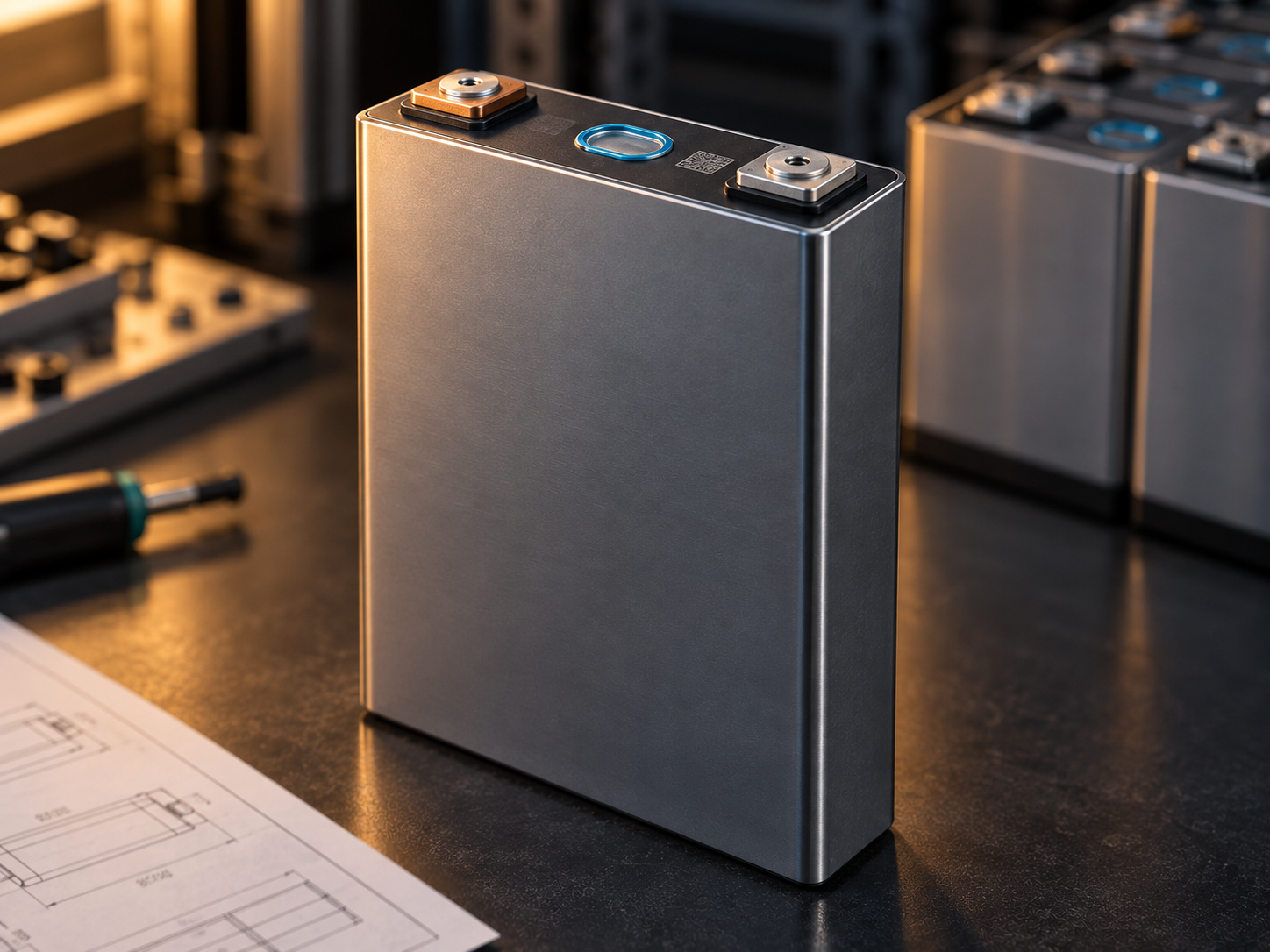
Cell
A single lithium iron phosphate (LFP) cell — the safest, longest-life chemistry in the industry. It stays stable under heat, tolerates deep cycling, and is rated for thousands of full charge/discharge cycles.
- 2
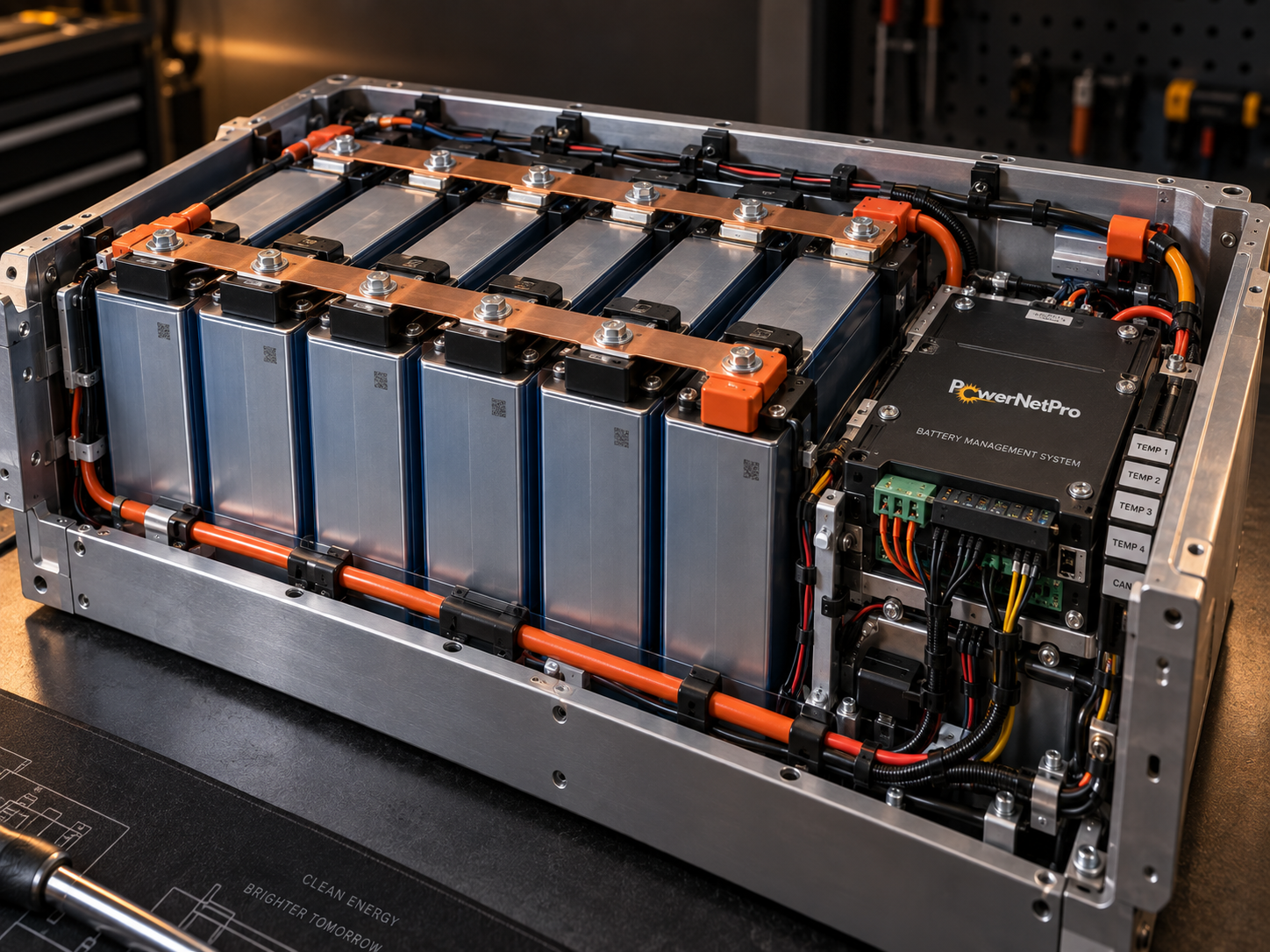
Module
Cells are matched, arranged and wired into a module, then wrapped with sensing so voltage and temperature are tracked at the cell level — not just across the whole pack.
- 3
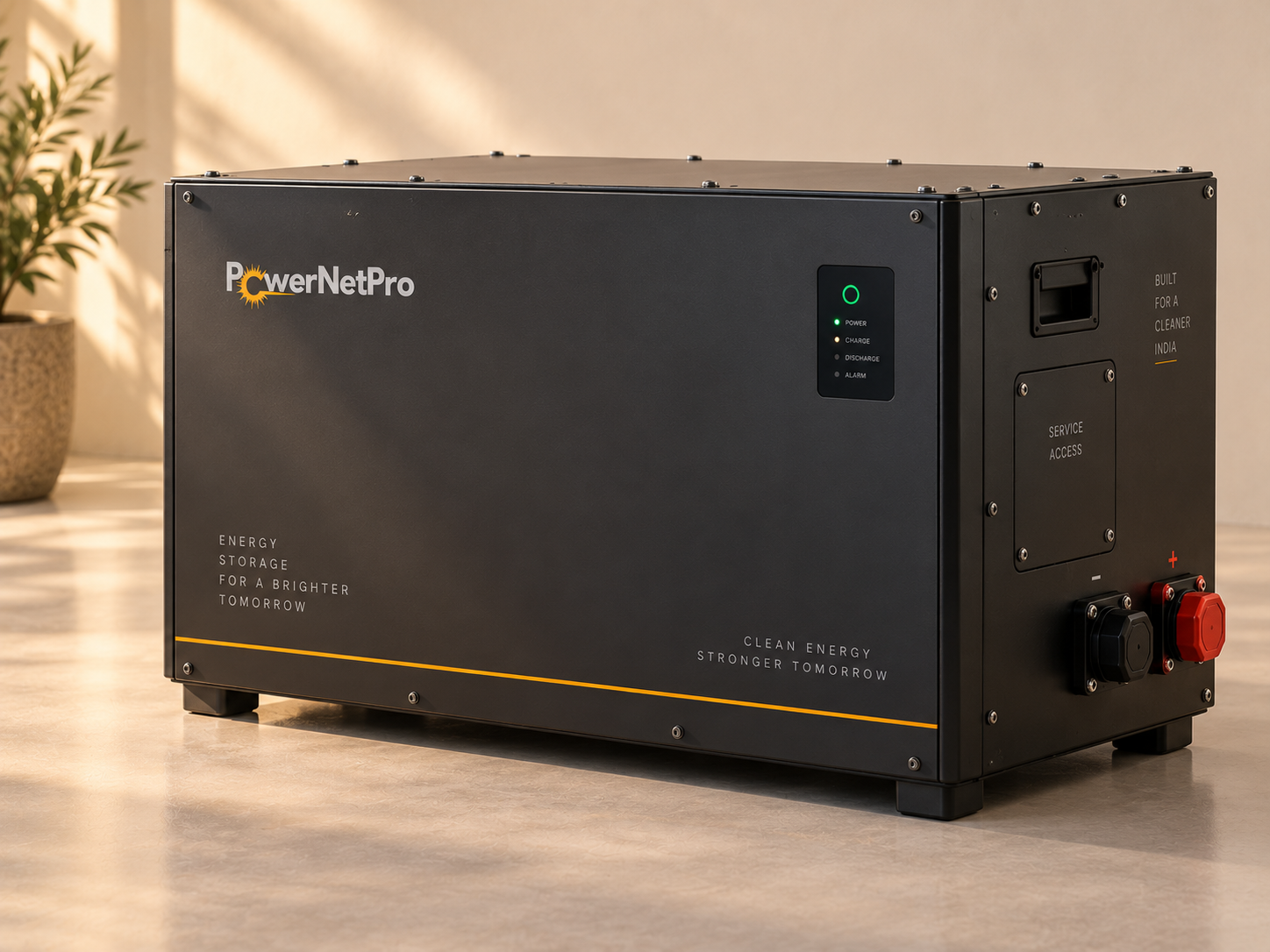
Pack
Modules, the BMS and thermal management are sealed into a rated enclosure — a finished, protected product built for your wall, floor or rack.
What every system is made of
Five parts, each doing one job well. Here's what they are and why they matter — no jargon left unexplained.
LFP cells
The safe, long-life chemistry we build on.
Lithium iron phosphate cells give high cycle life, a wide safety margin and stable thermal behaviour. They're rated for thousands of full cycles at high depth of discharge, so the pack keeps its usable capacity for a decade or more.
BMS — Battery Management System
The brain that keeps every cell healthy.
The BMS monitors voltage, current and temperature on every module, balances the cells and enforces hard protection limits. It's the difference between a loose bank of batteries and a finished, dependable product.
PCS / hybrid inverter
Converts and directs the power.
The power conversion system manages charge and discharge, grid interaction and backup switchover — transferring your loads to the battery fast enough that connected equipment never sees the gap.
EMS — Energy Management System
Decides when to charge and discharge.
The EMS runs the strategy: charging on cheap or solar hours, discharging at peak tariff, and always reserving capacity for backup — tuned to your tariff plan and the priorities you set.
Protection & monitoring
Safety and visibility, built in.
Fusing, isolation, earth protection and thermal management are engineered into every layer, with remote monitoring so drift and faults are caught early — before they become a problem.
Charge, discharge, backup
The same three behaviours, running automatically around your tariff and priorities — no buttons to press.
Charge
During cheap or solar hours, the battery quietly fills up.
During cheap off-peak hours — or when your solar is producing more than you're using — the system quietly charges, storing energy at its lowest possible cost.
Discharge
At peak tariff, it powers your building instead of the grid.
As tariffs climb into peak hours, the battery powers your building instead of the grid, shaving both your energy bill and demand charges.
Backup
The moment the grid drops, it takes over — under 20 ms.
The instant the grid fails, the inverter transfers your loads to the battery in under 20 ms — fast enough that lights, fans and equipment never flicker.
System tiers at a glance
Indicative ranges by building type. Your exact configuration — capacity, inverter and layout — comes from the free audit.
| Tier | Usable capacity | Inverter | Chemistry | Enclosure |
|---|---|---|---|---|
| Home | 5 – 15 kWh | 3 – 8 kW | LFP | Wall / floor cabinet |
| Society / Commercial | 15 – 60 kWh | 10 – 30 kW | LFP | Floor / rack |
| Industrial | 60 kWh+ | 50 kW+ | LFP | Rack / containerised |
Systems are modular — capacity and power are configured to your loads and site, then scaled later if your needs grow.
Safe by design, not by luck
Safety isn't a single feature — it's engineered in at every layer, from the chemistry of the cell to the earthing of the final install. Here's what that means in practice.
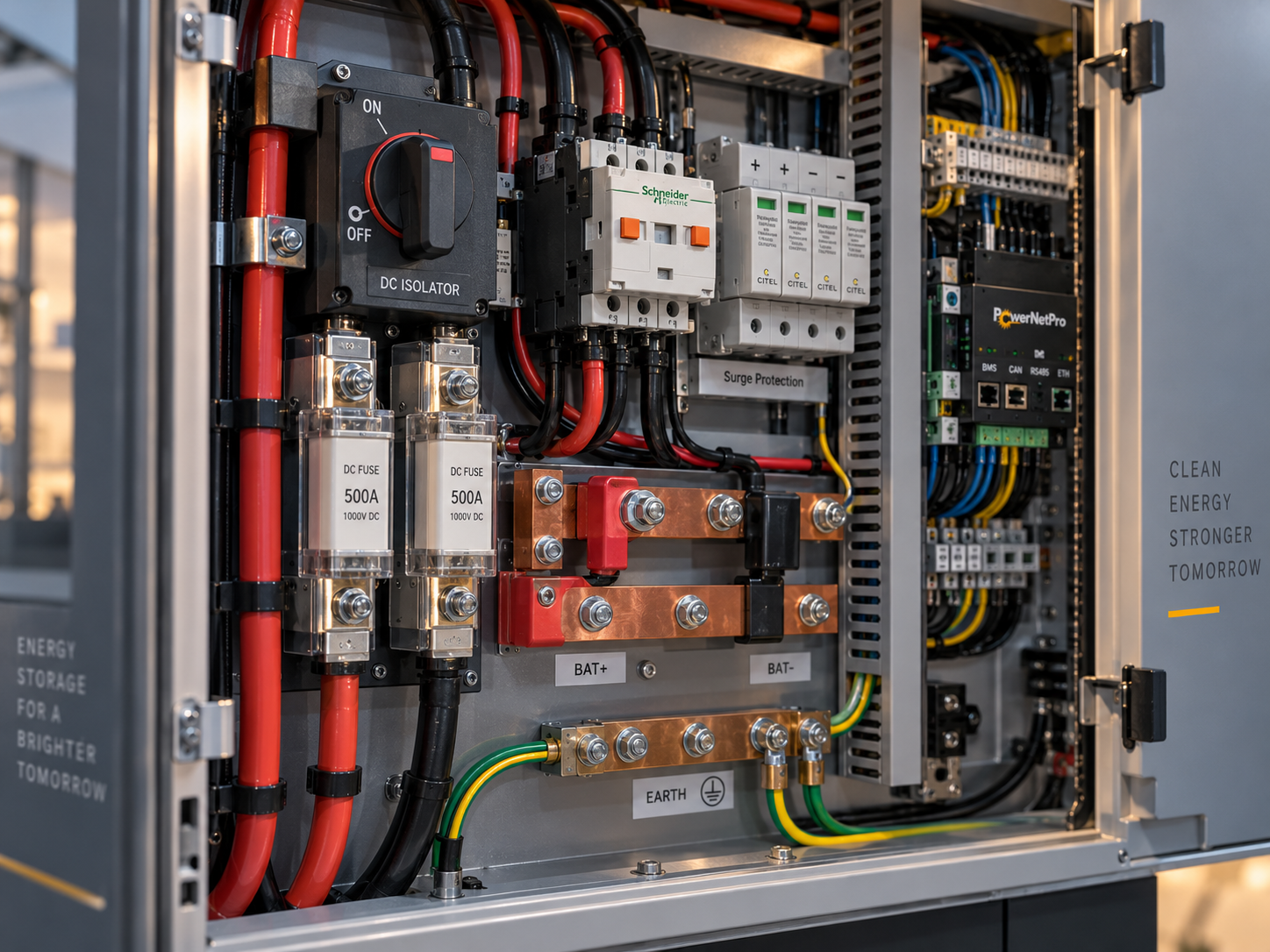
Safe chemistry
LFP is intrinsically stable — it doesn't head into thermal runaway the way other lithium chemistries can. Safety starts at the cell.
Cell-level BMS
Continuous monitoring of voltage, current and temperature per module, with active balancing and hard protection cut-offs.
Electrical protection
Fusing, isolation and proper earthing on every install — sized, wired and documented to standard.
Thermal management
Airflow and thermal design keep cells in their optimal band, in Indian heat and enclosed cabinets alike.
Fail-safe by design
If anything moves out of range, the system shuts down safely rather than pushing on. Fault, not fire.
Monitoring & alerts
Remote monitoring surfaces early warnings, so service is planned ahead — never an emergency.
Want this sized for your building?
Get a free, no-obligation audit. We'll size the right system and show you the real numbers.